Article
Eye Gaze Technology

A Transformative Tool for Individuals with Severe Spinal Cord Injuries within Case Management

In the field of assistive technologies, few innovations have proved as transformative as eye gaze systems for those facing the profound challenges of severe spinal cord injuries (SCI). These injuries, often resulting from trauma to the cervical or thoracic spine, can cause tetraplegia or quadriplegia, severely restricting motor function, speech, and independence. For individuals in such circumstances, traditional means of interaction with the world (typing, speaking, or even gesturing) become inaccessible. Eye gaze technology offers a sophisticated solution that harnesses the subtle movements of the eyes to enable communication, environmental control, and digital engagement. This article examines how eye gaze systems are revolutionising case management and improving quality of life for people with SCI, drawing on empirical evidence and real-world applications.
 
Understanding Eye Gaze Technology
 
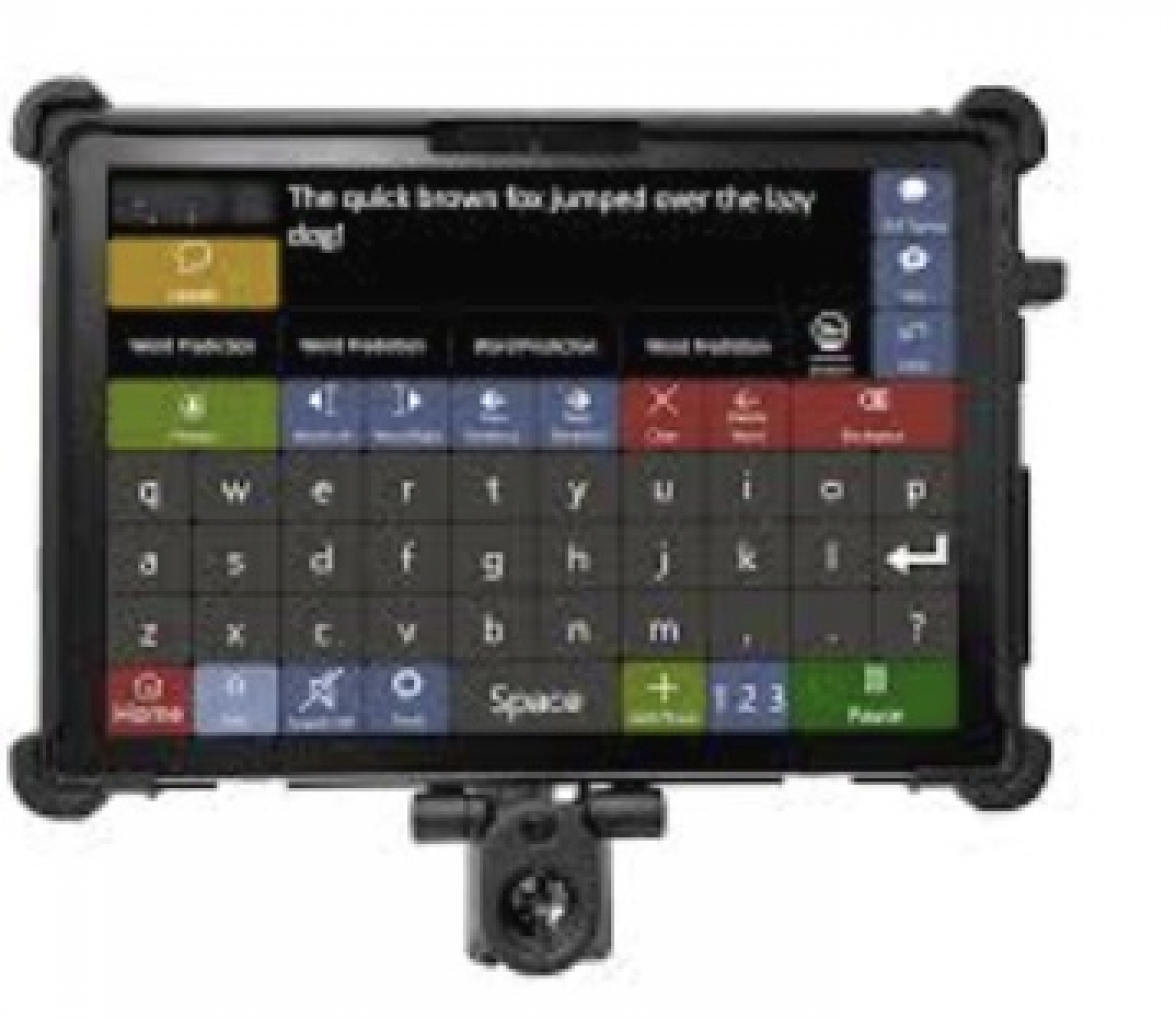
Eye gaze technology, also known as eye-tracking assistive technology (EGAT), uses infrared cameras and sensors to detect and interpret the user's eye movements and fixations. These systems translate gaze patterns into actionable commands, such as selecting icons on a screen, typing via an on-screen keyboard, or controlling smart home devices. Unlike other assistive tools that rely on residual motor abilities (for example, sip-and-puff switches or head trackers), eye gaze requires only functional oculomotor control, which is often preserved even in high-level SCIs.Commercially available systems, such as those from Tobii or similar devices, illustrate the evolution of this technology. They provide low-fatigue operation, suitable for users who may be ventilator-dependent or bedridden, without requiring head movement. Early adoption in clinical settings has shown promise, particularly for non-verbal children with high spinal cord injuries, where it serves as an intervention tool to support communication from a young age. By integrating with software for voice synthesis, internet browsing, and environmental controls, these devices enable users to interact autonomously in ways previously unimaginable.
 
Revolutionising Case Management
 
In the context of SCI case management, eye gaze technology shifts the paradigm from passive care recipient to active participant. Case management for severe SCI involves multidisciplinary coordination, including medical monitoring, rehabilitation, psychological support, and assistance with daily living. Traditionally, communication barriers lead to inefficiencies, misunderstandings, delayed interventions, and increased burden on caregivers.
 
Eye gaze systems address these challenges by enabling real-time, precise interaction. For instance, patients can directly express pain levels, treatment preferences, or environmental needs to healthcare providers, reducing reliance on intermediaries. A prospective study of inpatients with tetraplegia showed that, although psychological outcomes varied, the technology facilitated independent computer access and supported self-advocacy in care plans. Furthermore, integration with Internet of Things (IoT) frameworks allows users to manage smart home elements, such as adjusting lights, thermostats, or summoning assistance, thereby enhancing safety and efficiency in home-based care.
 
This autonomy optimises resource allocation for case managers and reduces hospitalisation risks by promoting proactive health management. In paediatric cases, early implementation has been associated with improved developmental trajectories, highlighting its value in long-term case planning. Overall, eye gaze technology supports a more collaborative, patient-centred approach and may reduce healthcare costs through improved adherence and fewer complications.
 
Enhancing Quality of Life
 
The true value of eye gaze technology lies in its profound impact on quality of life (QoL). Severe SCI often leads to social isolation, depression, and diminished self-esteem owing to loss of independence and interpersonal connections. EGAT counters these effects by restoring agency and enabling meaningful engagement. 
 
Research highlights significant psychosocial benefits: users report greater competence, adaptability, and self-esteem, with positive effects on participation in daily activities. For adults and children alike, the ability to communicate via synthesised speech or text revives relationships, allowing expressions of emotion, humour, and intellect that might otherwise remain unvoiced. A case study of a tetraplegic patient demonstrated how affordable eye-tracking systems instilled hope and emotional well-being, transforming despair into purposeful living.
 
Beyond communication, these systems support leisure and productivity (browsing the web, gaming, or even remote working), which correlate with higher QoL scores. For ventilator-dependent individuals with quadriplegia, the technology offers a fatigue-resistant alternative to verbal or manual methods, thereby prolonging functional independence. Studies also indicate broader societal reintegration, as users engage in social media, education, and advocacy, thereby reducing the isolation experienced by many with SCI. In essence, eye gaze technology extends physical capabilities while nurturing psychological resilience and fostering a fuller, more enriched existence.
 
Challenges and Future Directions
 
Despite its advantages, eye gaze technology has limitations. Usability can vary; some users find initial calibration challenging, and environmental factors such as lighting may affect accuracy. Accessibility remains an issue, with costs and training requirements posing barriers, particularly in resource-limited settings. Feasibility studies emphasise the need for controlled trials to quantify long-term benefits, especially among newly injured patients.Looking ahead, advancements in AI integration, such as predictive text, voice assistance, and chatbot features, promise even greater efficacy. Hybrid systems combining eye gaze with other modalities could broaden applicability, while research into pain assessment via eye-tracking opens new avenues for holistic care. Policymakers and clinicians must prioritise equitable access to ensure this technology reaches all who could benefit from it.
 
Conclusion
 
Eye gaze technology represents a beacon of innovation in the assistive landscape, profoundly altering the trajectory for individuals with severe spinal cord injuries. By empowering communication and control, it redefines case management as a collaborative endeavour and elevates quality of life through restored independence and social connectivity. As evidence accumulates and technology advances, its wider adoption could herald a new era of inclusivity, where physical limitations no longer define human potential. For people with SCI, this is not merely a tool; it is a gateway to reclaimed dignity and vitality.
Related Articles
James triumph

James triumph's in Oxford

At the City of Oxford Regatta, James took to the water with former Stratford adaptive rower Andy Morris and produced one of those races that stay with you. Drawn straight into the final against Oxford, they fought all the way and came through with a narrow, hard-earned, and very popular win.

7 September, 2026 News
CIW Wales Annual Report

CIW Wales Annual Report

Annual Return 2025/2026

29 June, 2026
Cotswold Wildlife Park

Cotswold Wildlife Park

a lovely accessible day out!

21 May, 2026 News
What our clients have to say:
  • "Thank you so much for all you're doing for us all. I know we took a lot of your time up today. You are fully aware of [Client’s] problems, behavioural and psychological, and believe that [Client’s] is treated with respect and allowed to live the sort of life any of us would want. The benefits for her and her girls will be so rewarding. Thank you so much."

    Clients names have been removed for privacy
  • "I just wanted to say how greatly I appreciate having had the benefit for my client of your professionalism and expertise".

    Clients names have been removed for privacy
  • “Thank you so much for the time you gave me today. I was most impressed by all that has been achieved on [Client’s] behalf and I congratulate you and the whole team. It was a pleasure to see [Client’s] looking so relaxed and to hear of the successful efforts which you have all put into giving her a new home and so evidently improving her quality of life… What a wonderful change of surroundings, approach and atmosphere! And [Client’s] looked so well and happy. Congratulations to all concerned.”

    Clients names have been removed for privacy
  • "I wanted to write to thank you for your ongoing help and support with this matter for the past few years. On many occasions you have gone above and beyond the usual requirements of a Case Manager and I know that [client] would most definitely had struggled without your constant support and assistance. This was at times a very challenging matter for everyone involved and your professionalism and guidance throughout was most appreciated. I would be happy to recommend you to colleagues and other clients."

    Clients names have been removed for privacy
  • “[Case Manager], once again, thank you so much for joining the conference by phone, it was a real pleasure having you there. M cannot recall having worked on a case with you before and was so very impressed by you – I advised him that you have never failed to impress me on a case yet.”

    Clients names have been removed for privacy
  • " I am immensely proud and honoured to be a part of this amazing organisation; who work so hard to enrich & empower the lives of those that we have the privilege to work with."

    JE (Case Manager)
  • "The conference day was full and interesting. The organisation from our perspective was excellent. As you explained, the result demonstrates the importance of high-quality case management! The topics were all important. It was an education which demonstrated that life can and should continue after a disaster. Everyone learned a lot, including your fellow professionals. You had a very good attendance. Well done! You should continue to bring your message to everyone; it is most important."

    CWW - QC
  • “I’ve never worked on a case where there has been such a large clinical team and I was always very impressed with how you managed to liaise with so many people and hold so much information in mind. The logistical challenges of getting [client] home were immense, and you managed this expertly. There is no doubt that his quality of life is better for having had you as his case manager”

    Neuropsychologist to Case Manager AA
  • "It has been an extraordinary experience to take our first flight with [Client] and enjoy a long holiday weekend with our family. Without your help this would have been impossible, and although we know you consider all this being your job and responsibility, we truly appreciate that you went far beyond the expected support and allowed us to get it all organised on time. We want to thank you for your outstanding help."

    Clients names have been removed for privacy
  • "May I also take this opportunity to thank you and CCM for all of the support and assistance that you have all provided, not only to [Client] and their family, but also to me and my firm which has served to ensure that [Client] is to receive sufficient compensation to meet their future needs."

    Clients names have been removed for privacy
  • " I appreciate that [client] has already responded but I just wanted to say it was lovely to meet you yesterday and also to thank you for all your help. It was so useful to have you there with your brilliant agenda! We achieved far more yesterday in an hour than I could have hoped for. I now feel far more confident that with your help we can get sorted everything that needs doing house wise, and indeed for [client]"

    Clients names have been removed for privacy
  • “Maggie ... amazing and credit to you, your team and all your clients. I was quite touched when watching this [YouTube video]. Just shows what you can achieve with the right support and attitude in place. Fantastic.”

    Jane Burns
  • “Kate, in my view, you are a case manager of highest level. Your knowledge, recognition and understanding of brain injury is second to none and I believe that anyone who has you as their case manager is an exceptionally lucky person.”

    Clients names have been removed for privacy
  • "I would just like to provide some feedback in relation to the case management services by [CCM case manager]. Her clinical expertise and cheery manner have been invaluable in successfully dealing with the matter. I have nothing but praise and gratitude for the professional way she has dealt with all the difficulties that have been presented in this case."

    Clients names have been removed for privacy
  • "Thank you for being an absolute pleasure to work with- it’s great to work with someone who is so passionate, supportive, efficient and who really genuinely cares."

    Clients names have been removed for privacy
  • "CCM has earned a reputation for being one of the country's leading Case Management Practices. As for litigation expertise, they are top of the tree. As a practice, we only deal with catastrophic injury cases. Our clients need the best experts available and we insist upon it. Maggie and Kate will always form part of our "dream team". Good case management entails knowledge, experience, determination, and diplomacy. CCM ticks every box."

    Clients names have been removed for privacy
  • "My team have worked with a large number of case managers over the years and in my experience [CCM case manager] is up there as one of the best. I am very pleased to endorse [CCM case manager] as a very caring, professional and knowledgeable case manager which I have no hesitation in recommending."

    Clients names have been removed for privacy

If you have any questions, or would like to reach out to a member of our team regarding the help we can offer you, please contact us today.

hello@ccmservices.co.uk or call 01608 682522